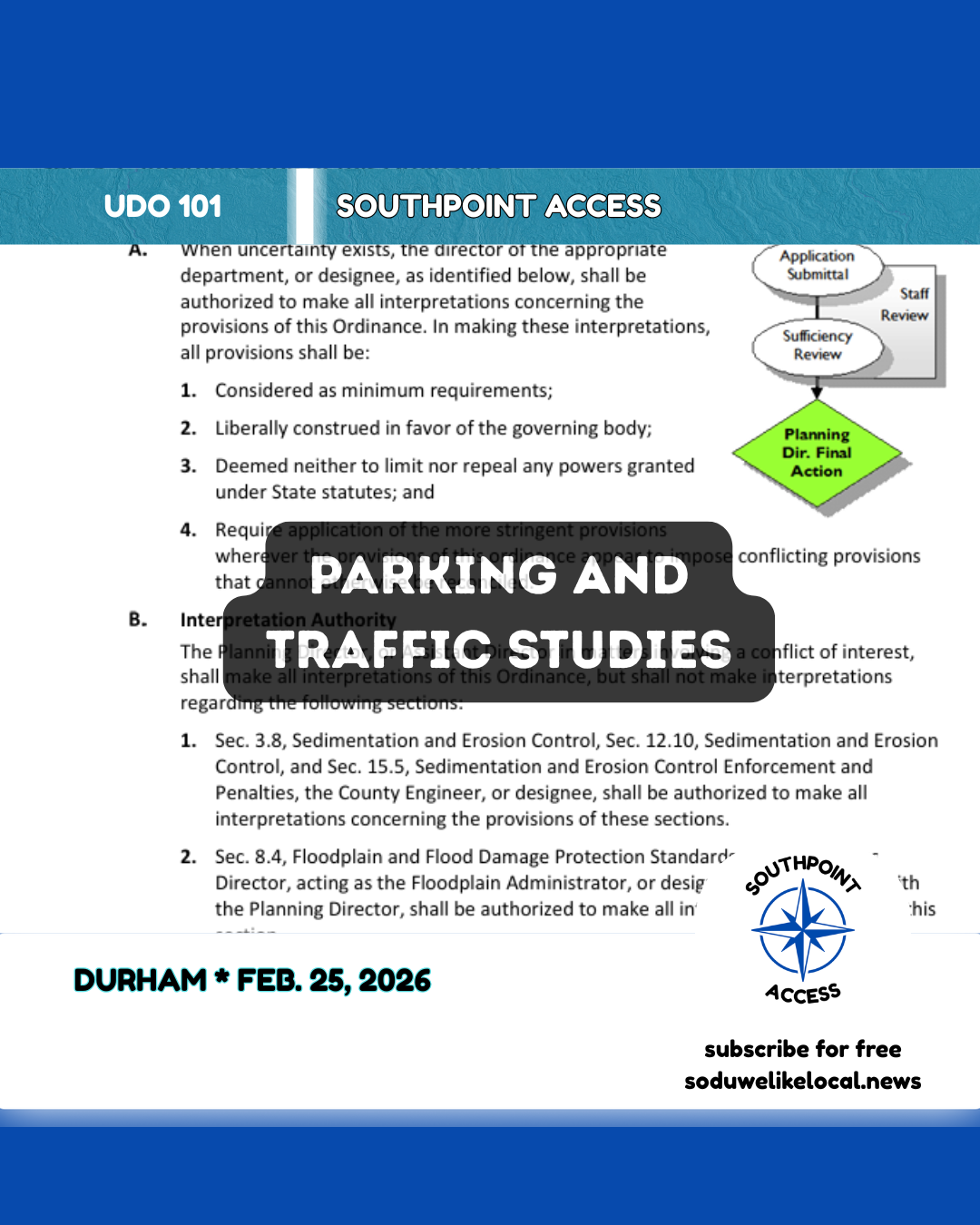
Parking and Traffic Studies: What the UDO Requires
Why parking rules vary by place - and when a project has to study its traffic impacts.

🗺️
What to Look For
If a project pops up near you and parking/traffic is the worry, here’s the fast path:
1. Which tier is it in? Parking maximums and placement rules vary by tier.
2. Is it Downtown/Compact Neighborhood vs Suburban/Urban? That often predicts whether parking goes in front, beside/behind, or needs screening/walls along streets.
3. Is the project big enough to trigger a TIA? Watch for the 150 peak-hour trip threshold (and cumulative impacts).
4. Is it big enough for TSUP? That’s the “very high trip generation” bucket with specific findings required.
5. Don’t forget bikes: bike parking is required and comes with design standards (especially in Downtown/Compact Neighborhood contexts).
If a project pops up near you and parking/traffic is the worry, here’s the fast path:
1. Which tier is it in? Parking maximums and placement rules vary by tier.
2. Is it Downtown/Compact Neighborhood vs Suburban/Urban? That often predicts whether parking goes in front, beside/behind, or needs screening/walls along streets.
3. Is the project big enough to trigger a TIA? Watch for the 150 peak-hour trip threshold (and cumulative impacts).
4. Is it big enough for TSUP? That’s the “very high trip generation” bucket with specific findings required.
5. Don’t forget bikes: bike parking is required and comes with design standards (especially in Downtown/Compact Neighborhood contexts).
Parking is one of the fastest ways a development conversation turns into a neighborhood argument.
Some folks worry a new project will dump cars on local streets. Others worry parking rules force projects to pave too much land - raising heat, runoff, and cost.
Durham's Unified Development Ordinance tries to steer a middle path: it sets parking and bike parking requirements, adds design rules about where parking can go, and - on big trip-generating projects - can require a traffic impact analysis (TIA).
Become a free subscriber to access the full article!
![[WordroW] Apologetic - Feb. 25, 2026](/content/images/size/w600/2026/02/wordrow25.png)