
SoDu Tech Watch: Why South Durham Parents Should Pay Attention to OpenAI’s Sora
A parent-first guide to Sora, the AI video app blurring truth and fiction - and what South Durham families and DPS can do about deepfakes and hoaxes.

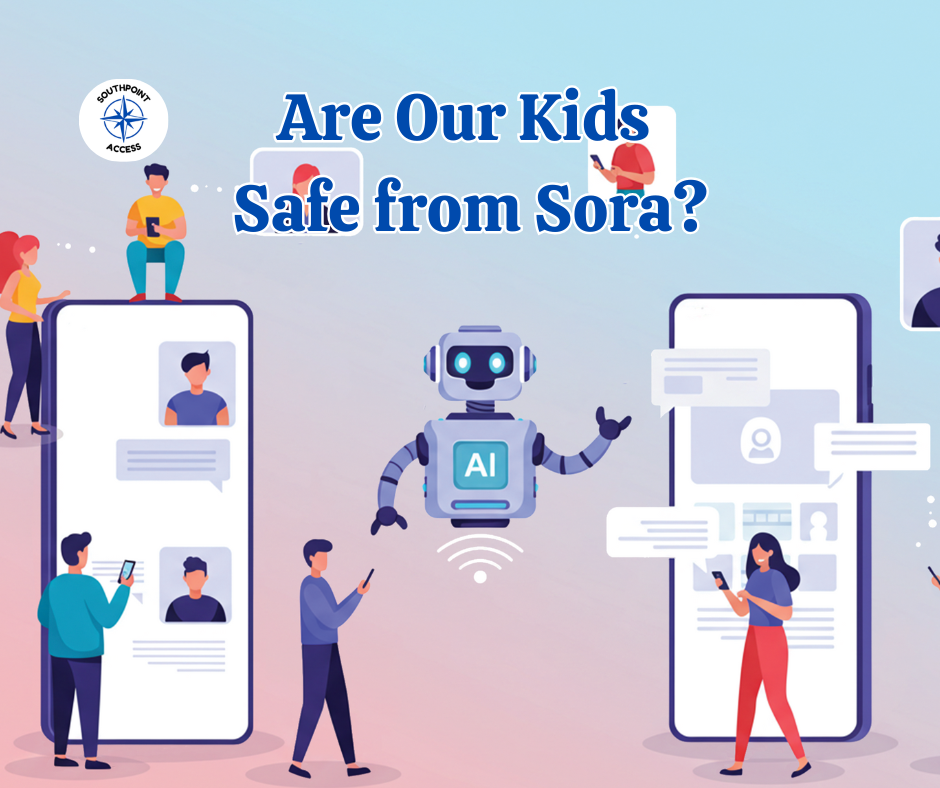
Sora is OpenAI’s new app that turns text into photorealistic, sound-synced video and lets users insert real people into clips via a Cameos feature.
It launched invite-only on iOS on Sept. 30, 2025, in the U.S. and Canada. Families of Robin Williams and other deceased figures have publicly condemned Sora clips that “revive” their likenesses, highlighting how easily reputations can be manipulated.
OpenAI says Sora videos carry synthetic labels, filters, and policy restrictions - yet watchdogs and reporters have already flagged moderation gaps and misuse.
What Is Sora - and Why It Matters in South Durham
Sora is OpenAI’s flagship text-to-video system and social app. Type a prompt (“a middle schooler giving a dramatic speech in the rain”), and Sora outputs a lifelike video with synchronized audio.
Users can also drop themselves or friends into scenes using Cameos. For teens steeped in Durham Public Schools Chromebooks and social feeds, that’s a potent combo: creation, remixing, and virality in one place.
Recent coverage shows the app’s feed can quickly surface edgy or misleading content - raising familiar “platform moderation” challenges, now with hyper-real video.
Local News Is Fighting to Survive
It takes neighbors like you to keep Southpoint Access going. Give and help keep vital work like this coming to your inbox. Consider making a donation to support local news right here in your own back yard!
The Local Risk: Deepfakes of SoDu Students
Imagine a clip circulating that appears to show a Jordan High student making a violent threat - or a Githens Middle student using slurs - when none of it happened. With Sora-style generation and face insertion, that scenario is now plausible and high-impact for school safety, mental health, and reputations.
Top concerns for families and schools:
- Deepfake identity misuse: Real faces mapped into fabricated scenes; fuel for harassment or discipline confusion.
- Hoaxes & synthetic threats: Highly believable “threat” videos can trigger disruptions and police response.
- Harmful content leakage: Filters can be bypassed; watermarking/metadata can get lost in re-uploads.
- Psychological harm: Shame, anxiety, and long-term reputational damage - especially for tweens and younger teens.
- Erosion of trust: If “seeing” stops meaning “true,” student culture suffers.

Get the Information Parents Need!
Our first edition of the SoDu Compass Family Resource Guide is now available. Download it today!
What OpenAI Says It’s Doing - and the Gaps
Stated safeguards include: safety filters (e.g., blocking certain public-figure abuse), visible synthetic labels/metadata, and consent controls for likeness features, guided by a public system card and ongoing red-teaming.
Reality check in fall 2025:
- Invite-only iOS launch with Cameos; growth has been rapid, with industry pushback on misuse and rights.
- Families of deceased figures (e.g., Robin Williams) are protesting unauthorized “resurrections,” and reporting suggests “historical figure” exemptions leave room for abuse.
What South Durham Parents Can Do Today
- Have the synthetic-media talk. Ask: “How would you tell if a video is fake?” Emphasize: don’t repost harmful clips “just to show others.”
- Avoid uploading faces/voices to creative AI apps; if teens experiment, opt out of Cameos/voice features where possible.
- Tighten devices & privacy. Check installed apps; lock down downloads/sharing; use Screen Time/parental controls for younger students.
- If your child is targeted:
- Save evidence (screenshots, original file/URL).
- Report in-app; notify your school immediately.
- If a clip depicts a threat - even if fake - contact Durham Police and the school’s SRO.
- Engage DPS & your PTA: Ask whether AI deepfakes are covered in digital citizenship, whether there are AI-video classroom guidelines, and what the school’s response plan is for synthetic hoaxes.
- Stay informed: Follow Common Sense Media and EFF for practical tips; track North Carolina discussions on deepfakes, student privacy, and minors’ likeness rights.
The Bigger Picture for SoDu
Sora is the first mainstream app to put photoreal, sound-synced, prompt-driven video - plus face insertions - into a scrollable social feed. That shifts the stakes from Hollywood to homeroom. In a community like South Durham, where many students are tech-native and schools strive for safe, inclusive spaces, getting ahead of synthetic media is now part of basic digital literacy.
Bottom line: This isn’t panic time - it’s prep time. Talk early, lock down settings, and make a plan with your school.
Are You Getting Ready for Sora?
Let Southpoint Access know your thoughts about this new app and what your family's doing to prepare.
🤝 Support Our Sponsors
Local journalism in South Durham thrives thanks to the generous businesses and organizations that make this work possible. 🧭
By supporting these sponsors, you’re helping Southpoint Access continue to deliver trusted, hyperlocal news and resources for our community - from school updates to neighborhood stories that keep SoDu connected.
💛 Shop local. Hire local. Support those who support Southpoint Access.





![[WordroW] Survive - March 7, 2026](/content/images/size/w600/2026/03/wordrow37.png)