
[Gourmand Next Door] When Left To Their Own Devices
This flat gravelly land is well-suited to Cabernet Sauvignon, that powerhouse of a grape. The gravel helps to retain and reflect heat into the grape helping it ripen in a climate that is not super warm.
![[Gourmand Next Door] When Left To Their Own Devices](/content/images/size/w1200/2025/10/gourmandnextdoor--1-.png)
💌 [Subscribe Free] | [Support Local Stories]
With the last installment, we were in the Right Bank of Bordeaux, a place of sloping hills and interspersed rivers collecting into the Gironde Estuary. Now let us traverse the estuary and alight on the Left Bank.
This is a place peculiar, radical, and historic. This is where the onus of provenance proclaims greatness on the one hand and judgment on the other.
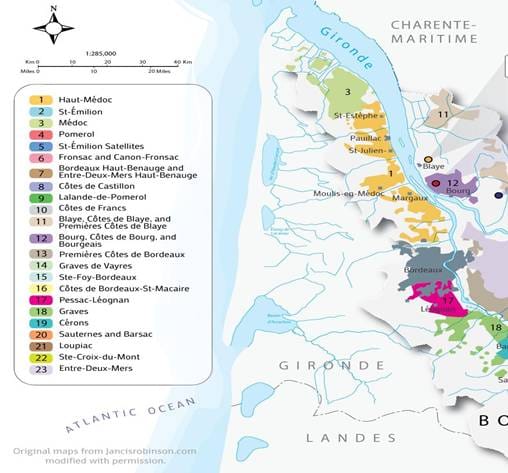
You have heard me yammer on about the importance of soil and the types of soil that a grape will grow in, but no one place is this clearer than on the Left Bank of Bordeaux. By request of the King of France, Dutch engineers were brought to the Médoc region (about 18 miles north of Bordeaux city) to drain the swampland.
Thanks for reading Southpoint Access! Become a subscriber or sponsor and support neighborhood news!
The Dutch did what they do best and created a series of canals and windmills that effectively drained the inhospitable land to a vast, arable field. The resulting soil underneath were gravel soils that provided good drainage, and the vignerons of the Left Bank soon began to make wines of note. So, one of the most famed regions of all wine making was the result, not of natural features, but man-made ingenuity.
The maritime climate of Bordeaux is mercurial. There are no huge shifts in temperature throughout the seasons, but strong storms, sudden tempests, and clinging humidity provoke wild shifts in the year’s grape harvest. The last important feature the Dutch engineers created before being asked not quite so kindly to never come back, was to plant a forest on the Western edge of the peninsula. This provided a barrier against the onslaught of weather from the Atlantic, and helps to prevent outright catastrophe in the vineyards.
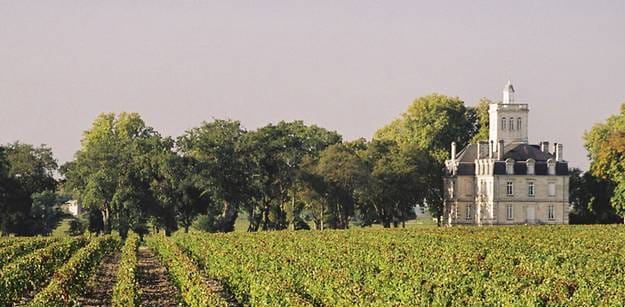
Which brings us to the grapes. This flat gravelly land is well-suited to Cabernet Sauvignon, that powerhouse of a grape. The gravel helps to retain and reflect heat into the grape helping it ripen in a climate that is not super warm. Just like across the river, there is a diversity of grapes that are produced that go into the blend of the wine. This ensures a vintage every year.
The Left Bank is almost an inverse of its neighbor, with Cabernet Sauvignon making up the bulk of the wine followed by Merlot, Petit Verdot, and others to round out the wine. These are powerful wines that are tannic and will give you a sock in the mouth when young. It’s best to leave them for 10 years before approaching drinking them. With that being said, 2014 & 2015 were pretty phenomenal years (hint, hint, wink, wink).
But wine is not merely agriculture for the sake of serving people. No, it is financial stability, power, and reputation, and nowhere is this truer than on the Left Bank. With the accolades for the wines, came money and power. The wine merchants of Bordeaux saw the châteaux as an investment scheme. By providing financial backing to the wine growers and winemakers, the merchants became the driving force of the wine market in Bordeaux. So influential were these merchants that Emperor Napoleon III asked them to create a list of the best wines to showcase at the Universal Exposition at Paris in 1855. These are the growths of Bordeaux (a silly name, I know).
Initially, it was a propaganda piece for Bordeaux, but it became so much more. Though the wine merchants balked at making the classification, it soon became apparent that it was very good for business. It broke down into 5 divisions, the top group was the 1st growths (Premiers Crus), 2nd growths (Deuxièmes Crus) and so on down the line to the 5th growth. Now, how many châteaux are in these growths you ask? Here’s the breakdown:
· 1st Growth: 5 (4 to start off, but one château complained until it was promoted)[i]
· 2nd Growth: 14
· 3rd Growth: 14
· 4th Growth: 10
· 5th Growth: 18
Does this mean that a Premier Cru is five times more excellent than a Cinquièmes Cru? Sure, it should be better, but five times better? That gets a shoulder shrug. Now this is only 61 châteaux for a pretty large (remember largest AOP producing region of France) region. Where does that leave the rest of the vignerons?
This is where it gets even more French, in the best possible way. In 1932, there was an additional classification system set up for those who were not privileged enough to merit inclusion in the 1855 group. In total, 444 estates were given their own merit system, Cru Bourgeois, that would be regularly updated, unlike the 5 growths. A château could rise or fall depending on its wares, not just float on the promise of wine. In September, the latest rankings were announced for 170 estates accounting for 40% of all the wine bottled on the Left Bank.
So, where does this leave us? The Left Bank of Bordeaux has been producing remarkable wines for nearly 500 years without huge interruption. As so much depends on the weather, the studious drinker should search for impeccable years (2005, 2009, 2010, 2014, 2015). Then, you can narrow down the contenders from Cru Bourgeouis to a listed growth. If starting at the top-end, expect to pay $500 or more per bottle. The Crus will provide a great showing of the standards expected on the Left Bank without necessarily breaking the bank (<$70).
These wines tend to be aggressively tart when young, but they have the potential to age gracefully and submit to sumptuous, velvety delights, if you have patience. A place greatly influenced by climate, and the vignerons that decide to tame the vines, Bordeaux can provide you with warmth on cool autumn’s eve.
À votre santé!
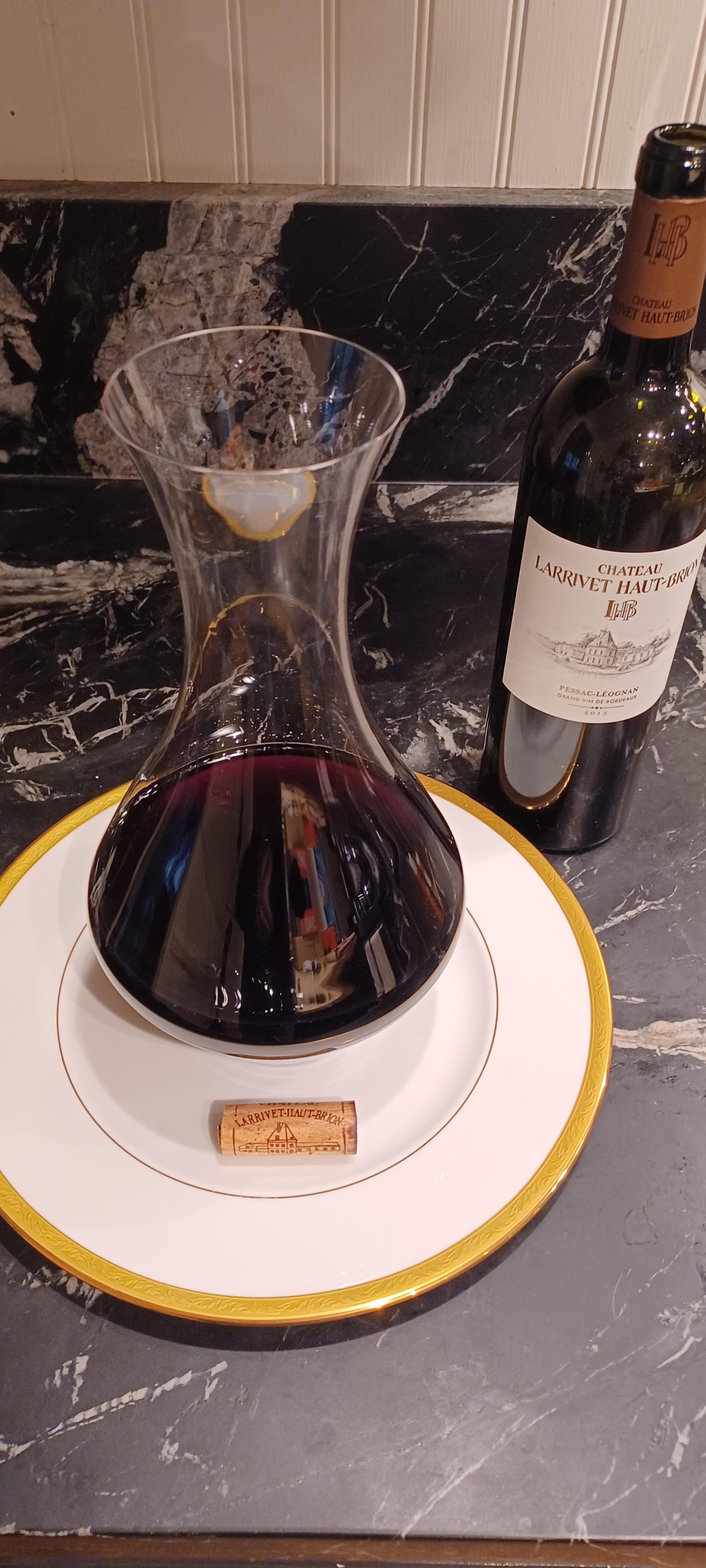
Wine for Thought:
Chateau Larrivet Haut-Brion 2015. 62% Cabernet Sauvignon, 33% Merlot, 5% Cabernet Franc. Pessac-Leognan, Bordeaux, France.
Sight: Deep Garnet with brown secondary coloring. Thick tearing.
Aroma: Ripe black plum, leather and green bell pepper with medium intensity.
Palate: Big ripe plum and tobacco with hints of green bell pepper and gravel mixed in the back. Lovely soft tannins and medium acid. High alcohol levels at 14.3%.
Notes: A very tempting left bank Bordeaux that is coming into its own after a decade ageing. A beautiful round body with dynamic fruit and acid balancing the wine. Pair well with game paella or roasted boar.
Source: Wegman's, $50.
[i] Château Mouton-Rothschild. Labelled on the bottle “Premier ne puis, seconde ne daigne, Mouton suis.” Or, « First I cannot be, second I deign not to be, I am Mouton.” After promotion in 1973 (that’s how long the campaign had been running), the new motto was “Premier je suis, Second je fus, Mouton ne change.” Now, “Premier I am, Second I used to be, Mouton does not change.”
Get Connected
- Send email to your neighborhood news guy: wes.platt@southpointaccess.news
- Follow on Bluesky
- Join our Discord community
- Join the Southpoint Access subreddit!
🤝 Support Our Sponsors
Local journalism in South Durham survives thanks to the generous businesses and organizations that make this work possible. 🧭
By supporting these sponsors, you’re helping Southpoint Access continue to deliver trusted, hyperlocal news and resources for our community - from school updates to neighborhood stories that keep SoDu connected.
💛 Shop local. Hire local. Support those who support Southpoint Access.





![[WordroW] Survive - March 7, 2026](/content/images/size/w600/2026/03/wordrow37.png)