
How the war against Iran is squeezing oil supplies and raising Durham fuel prices
Diesel is near $6 in Durham. Here’s how tanker attacks, disrupted oil routes, and limited U.S. protection windows are driving costs closer to home.

 Wes Platt
Regular gas is closing in on $4 a gallon around Durham. Diesel has climbed to nearly $6, setting a new local record.
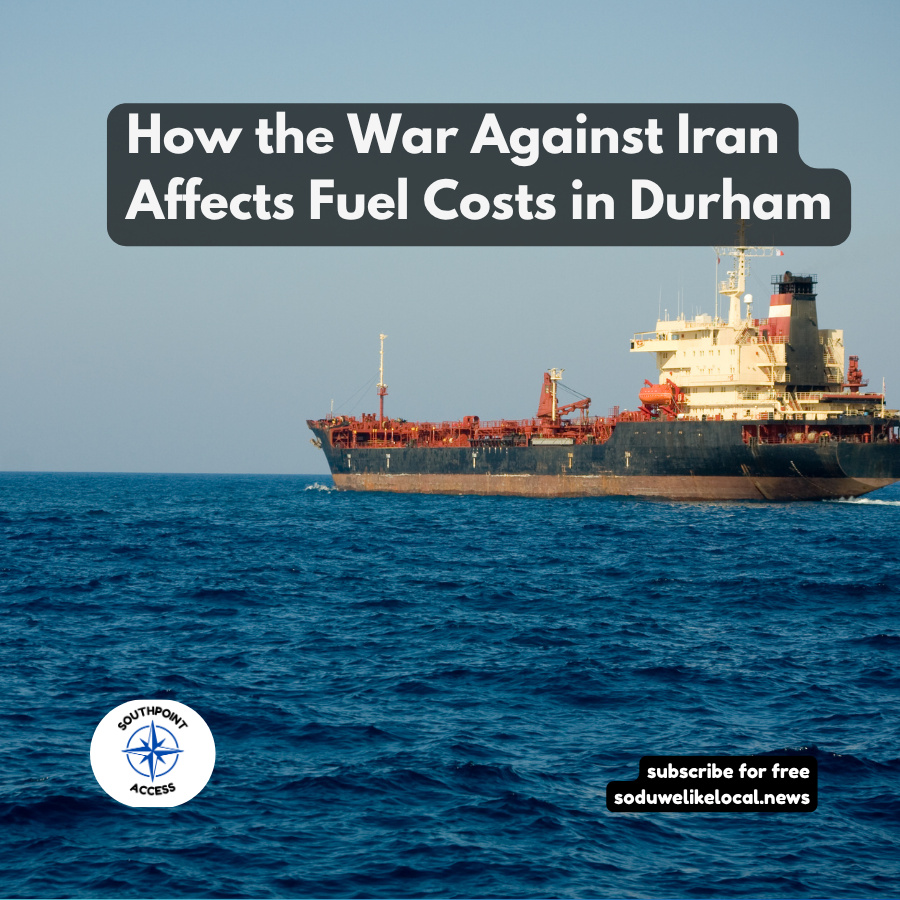
The immediate problem isn’t a disruption at a local pipeline or fuel terminal. It’s a global supply squeeze created by the U.S.-Israeli war against Iran, which has sharply reduced the oil and refined fuel moving through the Strait of Hormuz and other Middle Eastern shipping routes.
North Carolina receives much of its gasoline, diesel, and jet fuel from Gulf Coast refineries through pipelines, including the Colonial Pipeline system. But those refineries operate in a global market. When overseas supplies disappear, international buyers turn to oil and fuel produced elsewhere, including in the United States. That competition pushes prices higher here, too.
As of Saturday, Sept. 12, regular gasoline averaged about $3.99 a gallon in the Durham-Chapel Hill area. Diesel averaged just under $5.99, its highest recorded local average, according to AAA.
| Fuel | Sept. 12 | Week ago | Month ago | Year ago |
|---|---|---|---|---|
| Regular gasoline | $3.99 | $3.88 | $3.79 | $2.94 |
| Diesel | $5.99 | $5.85 | $5.34 | $3.55 |
For someone filling a 15-gallon gasoline tank, the difference from a year ago works out to nearly $16 per fill-up.
Diesel’s increase reaches beyond the pump because it powers trucks, construction equipment, farm machinery, and many school buses and government vehicles. Those costs can eventually show up in delivery charges, grocery prices, construction bids, school transportation expenses, and public works budgets.

![[SoDu Crime Watch] Another rough week for parked cars](https://storage.ghost.io/c/50/33/50334374-93a7-4cf9-ba69-d7d51c63be2a/content/images/size/w600/2026/07/crimewatch--1-.png)

