
5 Takeaways from Durham's Gun Violence Recommendations
A city-county working group wants Durham to focus on the people and places at greatest risk, improve coordination, and reduce shootings by 10% each year. A detailed action plan is due Aug. 25.

 Wes Platt
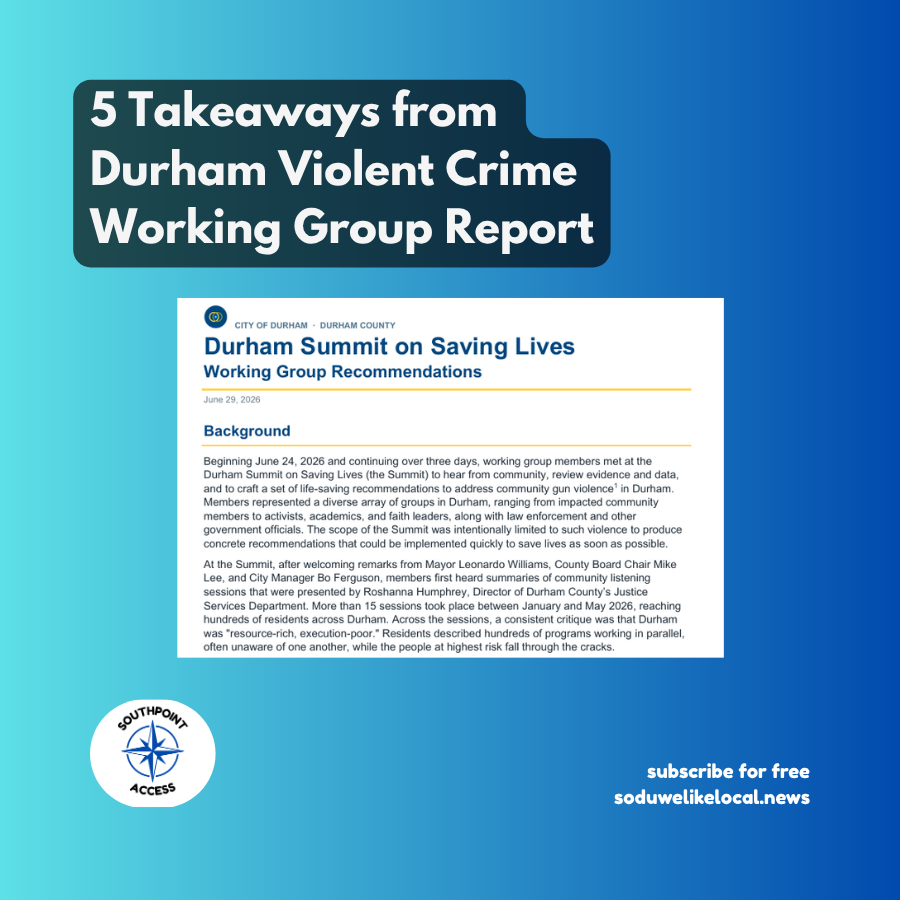
Durham isn’t short on programs intended to prevent violence. The problem, residents told local leaders, is that those programs don’t always work together or reach the people facing the greatest risk.
Participants in more than 15 community listening sessions described Durham as “resource-rich, execution-poor,” according to recommendations released after the Durham Summit on Saving Lives.
The three-day summit began June 24 and brought together residents, community activists, academics, faith leaders, law enforcement representatives, and government officials. The group reviewed Durham homicide data, heard from national experts, and developed recommendations for reducing gun violence.
The resulting document focuses specifically on community gun violence, which it defines as lethal or potentially lethal firearm violence in community settings. It does not attempt to address every type of crime reported in Durham.
Here are five takeaways from the working group’s recommendations:

![[Dispatches Received in Error Issue 24] Public Notice Regarding Counterfeit Saints](https://storage.ghost.io/c/50/33/50334374-93a7-4cf9-ba69-d7d51c63be2a/content/images/size/w600/2026/09/dispatches921.png)
![[GALLERY] Durham Warbirds Lacrosse returns for Fall season](https://storage.ghost.io/c/50/33/50334374-93a7-4cf9-ba69-d7d51c63be2a/content/images/size/w600/2026/09/3.png)