
[Hope Valley at 100] George Watts Carr Helped Shape Hope Valley's Early Identity
The Durham architect, who lived from 1893 to 1975, gave many of Hope Valley’s earliest homes the revival-style character that still defines the neighborhood today.

![[Hope Valley at 100] George Watts Carr Helped Shape Hope Valley's Early Identity](https://storage.ghost.io/c/50/33/50334374-93a7-4cf9-ba69-d7d51c63be2a/content/images/size/w1200/2026/05/hopevalley57--1-.png)
 Wes Platt
George Watts Carr (1893-1975) helped give early Hope Valley its look, and a century later, that influence is still easy to see.
Long after the neighborhood’s debut as a country-club suburb built for the automobile age, many of its earliest homes still project the same message: permanence, elegance, and aspiration.
Southpoint Access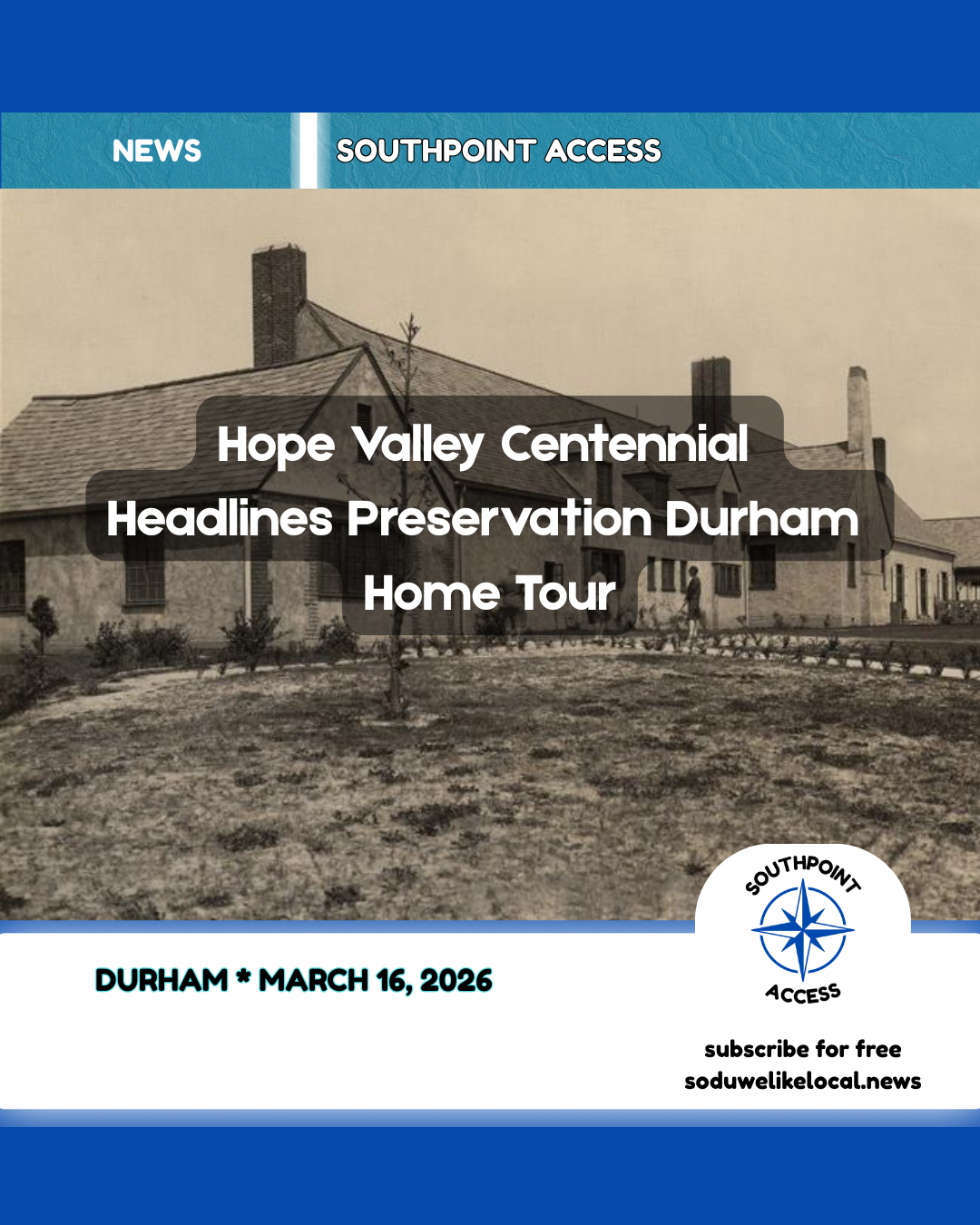
Steep rooflines, brick and stucco facades, prominent chimneys, and carefully composed streetscapes gave Hope Valley a sense of stature from the beginning. Carr was one of the people most responsible for shaping that first impression.
Carr may not be as widely recognized today as the neighborhood he helped shape, but he remains central to understanding what made early Hope Valley distinctive. He was not simply an architect designing one house at a time. He helped create the architectural language of a new community, one meant to signal refinement, status, and stability from the start. His work did more than fill lots. It helped define an identity.
Wes Platt

![[Dispatches Received in Error Issue 27] Memo Marked for Horatio Guppman, by Name](https://storage.ghost.io/c/50/33/50334374-93a7-4cf9-ba69-d7d51c63be2a/content/images/size/w600/2026/10/dispatches1012.png)